
A design student spends their first year producing three projects per week, from quick sketches to functional prototypes. After six months, their execution speed and ability to handle criticism are no longer comparable to those of a high school student who drew on weekends. Intensive practice in artistic studies triggers this kind of shift: it establishes technical reflexes and creative endurance that lectures alone cannot build.
Workshop Repetition and Acquisition of Technical Skills
The time required for a gesture to become fluid is often underestimated. For instance, drawing a clean ink line freehand takes hundreds of hours of repetition before it appears natural. The same logic applies in sculpture, animation, or printmaking.
This volume of work produces a concrete effect: the technical gesture eventually frees attention for composition. When one no longer struggles against the tool, they begin to think in terms of visual storytelling, rhythm, and graphic tension. This gap between a beginner and a regular practitioner is immediately visible in a portfolio.
Among art schools that focus on intensive practice, there are programs where workshop production occupies the majority of the schedule, often much more than theoretical courses. This ratio is not a philosophical choice: it responds to a direct pedagogical constraint.
Feedback varies on the ideal pace, but most training programs that produce solid portfolios at the end of the cycle share a common point: they impose a high production rate from the first year, without an extended observation period.
Regular Critique and Progress in Artistic Studies
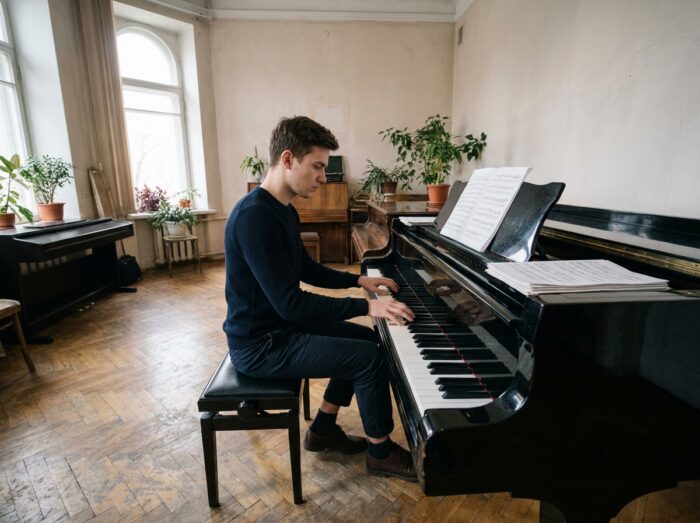
Producing a lot is not enough if the work is never confronted with an outside perspective. Intensive practice works because it is accompanied by frequent critique sessions, often weekly.
Specifically, a student who presents a project each week receives structured feedback on their color choices, readability, and graphic coherence. This short cycle (produce, show, correct, reproduce) significantly compresses the learning time compared to a pace where one submits a project per month.
What Repeated Critique Instills
- The ability to separate judgment on the work from judgment on oneself, a skill that prevents long-term creative paralysis
- A shared technical vocabulary with teachers and peers, which accelerates exchanges in the workshop
- The habit of defending an artistic stance with concrete arguments, not just intuition
This mechanism of ongoing feedback also encourages quicker abandonment of a direction that is not working. In a less intensive program, one might cling to a shaky idea for weeks due to lack of confrontation. With a sustained pace, the sorting happens naturally.
Overwork and Limits of Intensive Practice in Artistic Training
One cannot speak of intensive practice without addressing the issue of overwork. Recent literature associates artistic programs with a heavy workload with an explicit risk of jeopardizing students’ health. Short nights have become the norm, and there is a tendency to turn every free moment into production time: these excesses are documented.
Intensity only produces results if it remains sustainable over the duration of a training cycle. A student who pulls all-nighters for three years does not develop creative resilience; they accumulate a sleep debt that ultimately degrades the quality of their work.
Some universities are beginning to structure this reality. The University of Lorraine, for example, offers a special study regime for art students, with schedule adjustments, priorities in group work sessions, exemptions from attendance in case of performances, and exam accommodations. This status is renewed each year based on documentation, which attests that intensive practice is now a structuring factor in the academic trajectory, not just a personal choice.
Balancing Workload Without Losing Benefits
The trap would be to conclude that the pace needs to be reduced. It is not the volume that poses a problem, but the absence of planned recovery. The most effective programs alternate phases of dense production with times for reflection: analyzing references, visiting exhibitions, critical writing.
This accordion-like rhythm allows for maintaining high production without instilling chronic fatigue that, in the long run, standardizes work and stifles risk-taking.
Collaboration Among Students and Collective Skill Development
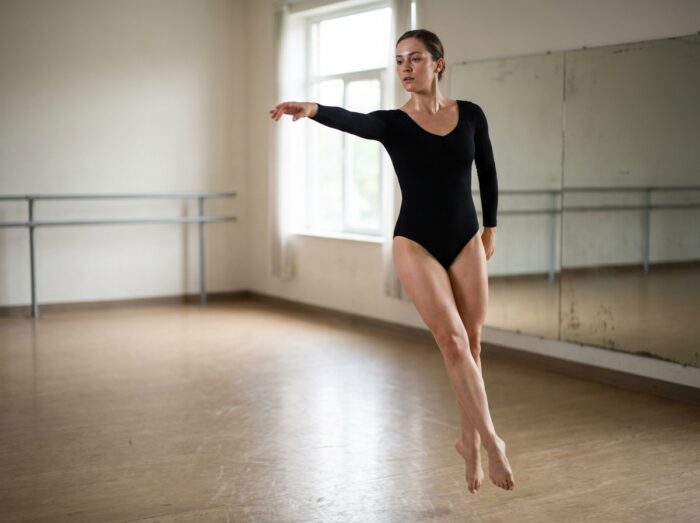
A less visible aspect of intensive practice lies in what it provokes within the group. When everyone produces a lot, the group’s reference level rises quickly. One no longer compares their work to an abstract ideal, but to what the workshop neighbor has laid on the table that morning.
This direct emulation acts as an accelerator. In visual arts as well as in design, collaboration among students (sharing techniques, informal feedback, cross projects) generates lateral learning that formal education does not always cover.
- An illustration student discovers a digital coloring technique by watching a classmate in animation
- A collective project requires negotiating aesthetic choices, which develops visual argumentation skills
- The daily confrontation with different approaches pushes one to break out of their habits earlier in the curriculum
This collective dynamic only occurs if the volume of work is sufficient for everyone to have something new to show regularly. Without sustained production, exchanges remain theoretical.
Intensive practice in artistic studies is not just a matter of hours spent in the workshop. It structures technical acquisition, accelerates the critical feedback loop, and creates the conditions for a collective emulation measurable in end-of-cycle portfolios. The challenge for training programs remains to maintain this intensity without tipping into exhaustion, by integrating recovery times into the program itself.