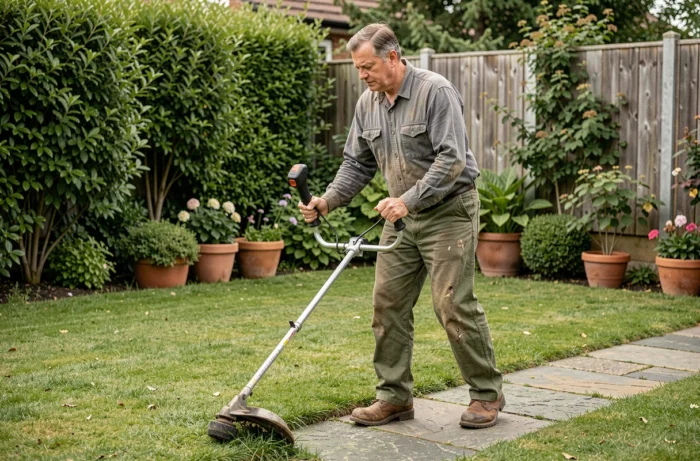
On a sloped terrain with brambles climbing along a fence, a battery-powered trimmer struggles within minutes. It is precisely in these situations that the thermal trimmer truly shines: where the vegetation is resilient and no electrical outlet is accessible. Choosing the right model is not just about comparing technical specifications. The terrain, the type of grass, and neighborhood constraints weigh as heavily as the engine displacement.
2-stroke or 4-stroke engine: what the terrain really demands
Most consumer thermal trimmers come equipped with a 2-stroke engine. A fuel-oil mixture is prepared according to the manufacturer’s proportions, and then it starts. The 4-stroke engine, rarer in this segment, runs on pure gasoline and produces less vibration.
In practice, the 2-stroke is suitable for short, intensive sessions: overgrown fence edges, slopes, and around flower beds. The 4-stroke is justified when spending more than an hour continuously on large areas, as fatigue from vibrations becomes a real factor.
The choice of fuel also has a consequence that is often overlooked: winter storage. A 2-stroke engine stored for several months with the mixture in the tank can pose restarting problems in spring. Draining the tank before the inactive period or using a fuel stabilizer prevents having to disassemble the carburetor in March. The comparisons available on coupebordurethermique.fr detail these differences in engine types model by model.
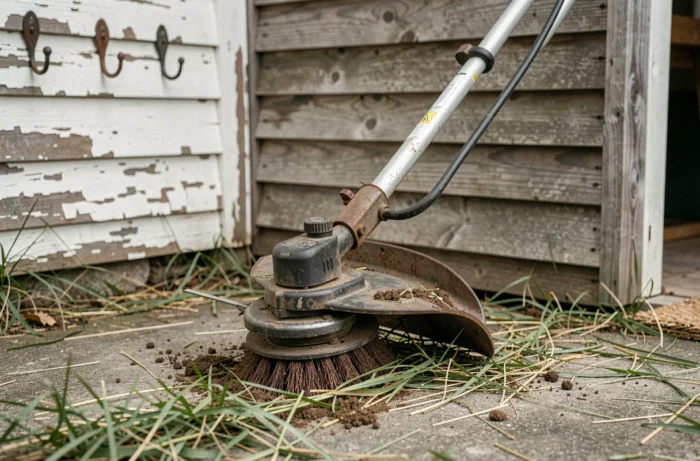
Engine displacement and cutting width of the thermal trimmer: matching power to the garden
It is often said that one must “choose the right power,” without anyone explaining what that really changes in practice. The engine displacement determines the available torque, which is the ability of the cutting line to slice through without slowing down when encountering dense vegetation.
For a typical residential garden with soft grass along a pathway, a small displacement is more than sufficient. However, as soon as the grass exceeds ankle height or when tackling tough grasses, a more powerful engine prevents the line from stalling with each pass.
Cutting width and line diameter
The cutting width determines the number of passes required. A thermal trimmer generally covers a wider strip than an electric model, which reduces working time on long edges.
The diameter of the line plays a complementary role. A thin line slices through soft grass with precision. A thicker line withstands impacts against stone edges or fence posts better, but it puts more strain on the engine. Matching the line diameter to the type of vegetation extends the life of the cutting head and limits line consumption.
Noise of the thermal trimmer: regulatory constraints before purchase
The noise level of a thermal trimmer significantly exceeds that of an electric or battery model. This is a fact, and it is often the first complaint made by neighbors.
What many do not know is that the permitted hours for noisy gardening work vary from one municipality to another. There is no standard national time frame. Restrictions depend on prefectural or municipal decrees, and some municipalities impose very short time slots on weekends.
Before investing, one should check two things:
- The permitted hours in their municipality (town hall or prefectural decree available online), to ensure that the available time slot matches their gardening habits.
- The type of acoustic value indicated on the product sheet: sound pressure measures the noise perceived by the user, while acoustic power describes the overall emission of the machine. Comparing a model based on pressure and another based on power skews the ranking.
- The presence of an anti-vibration device, which reduces fatigue but does not lessen the noise for the neighborhood.
If living in a dense housing development with strict time restrictions, a thermal trimmer remains usable, but it requires concentrating work during specific time slots.
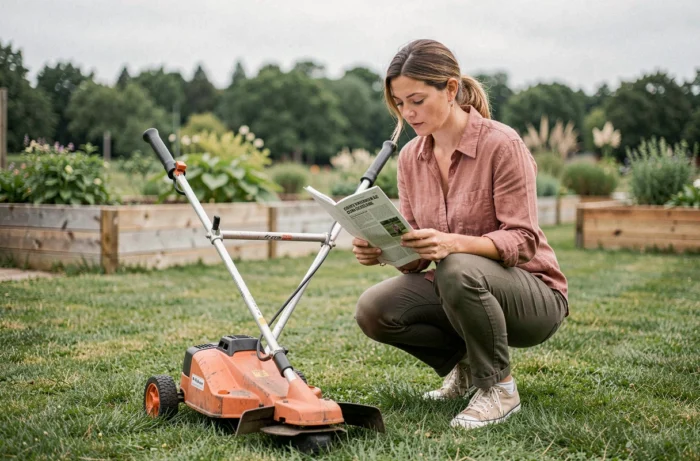
Safety and projection: what the guard cannot compensate for alone
The cutting head of a thermal trimmer spins at very high speed. The line or plastic blade can project stones, wood splinters, and plant fragments. The protective guard limits these projections towards the user, but it does not cover the entire environment.
Clearing the work area of stones and debris before each session remains the most effective precaution. A stone projected at high speed can shatter glass, injure a passerby, or damage the body of a nearby parked car.
One should also check the condition of the guard before each use. A cracked or poorly secured guard no longer serves its purpose. Replacing it costs little, but thinking about it after an incident costs much more.
Personal protective equipment
- Full protective goggles (not just sunglasses) to avoid eye projections.
- Long pants and closed shoes: the legs and feet are the most exposed areas.
- Hearing protection (earplugs or noise-canceling headphones), particularly recommended for thermal models whose noise level far exceeds that of normal conversation.
- Gardening gloves to reduce the effect of vibrations on the hands during prolonged sessions.
Maintenance of the thermal trimmer: actions that prevent breakdowns
A thermal engine requires regular maintenance that electric models do not impose. This is the price of power and autonomy.
The air filter should be checked every few uses. If clogged, it weakens the air-fuel mixture and the engine loses efficiency. The spark plug should be checked at the beginning of the season: a worn or dirty electrode complicates starting.
The critical point remains preparation for winter storage. Empty the tank, run the engine until it stops to purge the carburetor, clean the filter, and store the device in a dry place. These few minutes in autumn prevent a trip to the repair shop in spring.
The thermal trimmer remains the best tool for medium to large gardens where the vegetation poses a real challenge. The choice hinges on three concrete axes: the engine suited to the duration of your sessions, the noise level compatible with your local constraints, and the rigor of maintenance you are willing to uphold season after season.