
Online generators filter images under Creative Commons licenses while opening the door wide to visuals from private banks. On one hand, specialized platforms restrict customization; on the other hand, some advanced tools are available without registration or constraints, ready to be explored by anyone wanting to create for children.
Teachers and facilitators now have a true palette of services to design interactive educational games suitable for every age. The choice of the right tool is made based on concrete criteria: game format, sharing options, compatibility with tablets or computers, integration of educational resources. The selection is not random: it involves matching the tool to the real needs on the ground.
Educational game generators: an overview of tools and their advantages
The children’s game generator on Parlons Enfance provides a complete range of digital tools to transform learning into play. With this type of solution, parents, teachers, and facilitators can imagine custom educational games, from interactive quizzes to treasure hunts, tailored to each age group. The possibilities for customization are vast: choice of themes, addition of images, sounds, or even animations. A range of customizable templates facilitates creation and allows for quick adjustments of each game to the educational objective or the organization of a festive event.
Here are some common uses in practice:
- Creation of interactive quizzes to verify knowledge or spark curiosity
- Design of memory games or digital treasure hunts to energize workshops
- Insertion of various formats: text, image, audio, video to stimulate multiple channels of attention
- Access to printable educational games to alternate between quiet moments and physical activities
The flexibility of the generator also encourages children’s participation in the design. Involving them in creation fosters creativity and a sense of organization. Platforms offer tracking tools, result sharing, and exchange between students or families. One can draw inspiration from well-known games or invent entirely new ones: creative workshops, challenges, team games to liven up a party or support daily learning. Playing cards, animations, hybrid formats… everyone finds the solution suited to their audience, so that play becomes a lever for learning and exchange.
How to choose the ideal platform to create fun games suitable for children?
Choosing a game generator is not just about the aesthetics of an interface. It depends on the profile, whether parent, teacher, or facilitator, and the project. Each requires specific functionalities and intuitive navigation. Designing an educational game means being able to easily integrate images, audio, video and tailor every detail to the age, level, and needs of the children.
The motivation of children arises from a game designed for engagement. It is better to choose a platform that allows for fine customization: varied themes, adjustable rules, and content that fits the school curriculum or a specific skill. Being able to test the game, observe reactions, and adjust on the fly makes the difference between a forgotten game and a memorable activity.
Learning through play requires real preparation. Digital tools must support creativity but also allow for tracking of achievements. Some generators offer sharing functions, result tracking, designed to simplify the daily lives of teachers and families. Access to ready-to-use templates or supports to complete speeds up the learning curve without stifling imagination.
The ideal platform inspires invention, diversion, and collaborative creation. It supports both a creative workshop and a collective challenge, so that each educational game becomes a shared adventure, between pleasure and discovery.
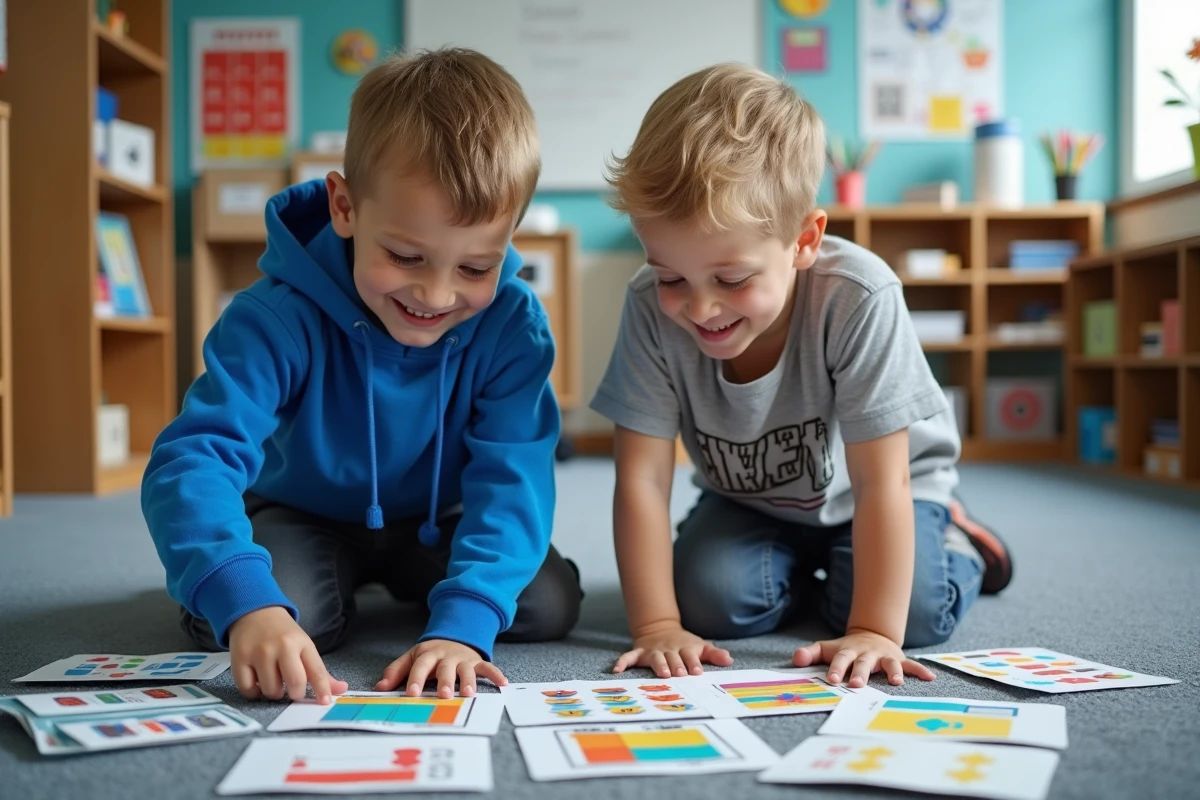
Original ideas and practical resources to imagine your own online games
Creating a digital educational game is neither random nor improvised. The process follows a logical thread. First, define the objective: reinforce a school concept, energize a workshop, prepare an animation for a party or event. Then comes the brainstorming to explore all possible mechanics: board, cards, dice, quizzes, virtual treasure hunts, mini-challenges, each format opens up perspectives.
The following steps structure the process:
- Develop a prototype and test it with children to check interest and adjust the mechanics
- Refine the rules, modulate the difficulty, enrich the game with visual or auditory elements to enhance engagement
- Finalize the game using an online generator, which allows for combining text, image, audio, or animation according to needs
A concrete example? The MultipHôtel game, designed to review multiplication tables, combines a hotel-shaped board, DOOR, KEY, LOCK cards, and treasure cards. Tested and improved based on children’s feedback, it proves that co-construction and iteration are the true engines of success.
Nothing prevents adapting a classic board game, inventing question cards on the CP curriculum, or staging an adventure about the history of France or the European Union. The educational games shop also serves as a source of inspiration or a resource complement. At every stage, from brainstorming to testing, creativity thrives on experimentation, leading to games that leave a mark on children and make learning lively.