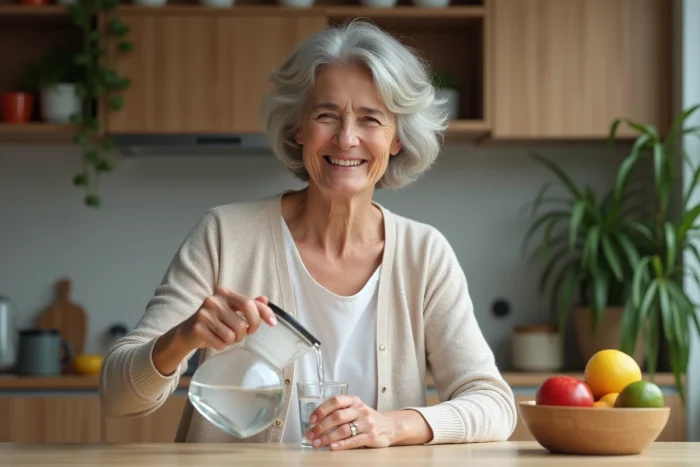
After 70, the sensation of thirst diminishes, but the hydration needs remain high. The risk of dehydration increases, sometimes without obvious symptoms. Some mineral waters rich in sodium can worsen hypertension, a common condition at this age. Conversely, exclusive consumption of very low mineral water can lead to deficiencies in calcium or magnesium. Recommendations vary according to health status, ongoing treatments, and dietary habits. The attention given to the choice of water then becomes a determining factor in maintaining balance and comfort in daily life.
Why does hydration become essential after 70?
As the years go by, the body sends fewer warning signals when it lacks water. The sensation of thirst gradually fades, while every cell continues to demand its daily ration. For those over 70, this gap makes dehydration all the more insidious: it sneaks in quietly, taking advantage of any fever, an episode of diarrhea, or a diuretic treatment to weaken the body.
The consequences are not limited to a simple temporary discomfort. Insufficient hydration dries out the skin, impairs kidney function, muddles alertness, and increases the risk of falls. The World Health Organization regularly sounds the alarm: a lack of water in older adults weakens defenses, exacerbates chronic illnesses, and leaves the door open to infections.
The choice of which water to drink after 70 is not trivial. It is a real lever to maintain one’s balance. Water intake must compensate for losses but also be adjusted to each profile: medical history, treatments, cardiovascular status. For both women and men, this topic leaves no room for improvisation. Adapting the quality of water, spacing out intakes, and prioritizing a suitable mineral composition without excessive sodium all contribute to the stability of the body.
Some simple reflexes are necessary to maintain this balance:
- Decreased thirst: do not rely on your feelings; monitor the actual amount consumed each day.
- Daily water intake: spread consumption throughout the day, even if thirst does not manifest.
- Hydration balance: adapt the type of water to your medical situation and the advice of your healthcare professional.
How much to drink and how to recognize signs of dehydration in seniors
After 70, water intake needs to be managed precisely. Thirst fades, but the need for water never lets up. It is advisable to aim for around 1.5 liters of fluids per day, taking into account the water contained in food: fruits, vegetables, broths. Regularity matters more than desire: space out intakes throughout the day to compensate for insensible losses.
Some signals are unmistakable. A dry mouth, skin lacking elasticity, unusual fatigue, dark or scanty urine: these symptoms should raise alarms. Sometimes, confusion or sudden irritability are the first signs of a lack of water in seniors. This can quickly escalate: disturbances in alertness, falls, worsening of underlying diseases.
Here are some guidelines for maintaining optimal hydration:
- Spread water consumption throughout the day, without waiting to feel thirsty.
- Alternate beverages: water, herbal tea, light tea, soup, to vary pleasures and intakes.
- Moderate alcohol and heavily caffeinated beverage consumption, which can exacerbate dehydration.
The water you drink complements the hydration provided by meals. Each medical situation calls for specific adjustments: do not hesitate to seek advice from a healthcare professional to determine the most suitable amount of water.

Mineral waters, tap water, or low mineral content: how to choose wisely for your health on a daily basis
Tap water in France is subject to constant monitoring. Sanitary controls are rigorous, and potability is guaranteed most of the time. For seniors, it remains a reliable option, provided attention is paid to any local recommendations.
Some opt for mineral waters, appreciating their stable composition and guaranteed purity. However, not all are equal: mineral content varies greatly from one brand to another. To avoid overloading the kidneys, it is preferable to choose low mineral water, with a dry residue of less than 500 mg/l. Excessive sodium, calcium, or magnesium content can disrupt the body, especially in those with conditions such as hypertension, kidney stones, or cardiovascular diseases. Examining labels and adjusting according to one’s own situation becomes a valuable habit.
To clarify the different options, here are the key points to remember:
- Still water: ideal for regular consumption, it easily accompanies daily meals.
- Sparkling water: appreciated for its refreshing quality, it should be limited if digestive issues or hypertension are present.
A bottle of water is convenient when going out, but the ecological impact encourages limiting its use to what is strictly necessary. It is better to prioritize the quality of the water available at home while remaining attentive to the advice of the doctor, especially in cases of chronic conditions. Ultimately, every senior deserves water chosen with discernment, tailored to their needs and health situation. The right choice lies at the intersection of digestive tolerance, mineral composition, and medical context, to support every moment of daily life without missteps.