A sprinkler almost never settles for the flow rate proudly displayed on the label. Between the sometimes disappointing pressure of the network, a hose that stretches, a clogged filter, the result on the ground sharply contrasts with the theory. A shaky estimate of the flow rate and the garden transforms: here puddles, there thirsty stems, further away stressed plants. To control every drop, the system must be adjusted as closely as possible to the terrain, the equipment, and the ambitions.
Understanding the Importance of Flow Rate for Successful Automatic Watering
Relying solely on the manufacturer’s indications often means feeling around in the dark. The slightest clogged filter, a hose stretched over too many meters, or the pressure dropping when the whole neighborhood turns on the tap: these garden realities disrupt the theory written on the packaging. You end up with waterlogged areas and others completely forgotten. Every peculiarity of the terrain weighs in the balance: soil type, slopes, length, and organization of the network. The pretty numbers on the label, taken alone, offer little protection against random results.
For every part of the garden to truly benefit from the necessary water, one must juggle between available pressure, measured flow rate, and the specific needs of the vegetation. This meticulous adjustment changes the game: the vegetable garden thrives, the lawn doesn’t yellow, and the flowerbeds stay vibrant. When the terrain speaks, it’s better to listen than to rely on generalities.
For those looking for a clear method, this guide explains how to determine the ideal flow rate of a sprinkler and choose the equipment truly suited to the configuration of their garden.
What Criteria to Consider for Determining the Ideal Flow Rate of Your Sprinkler?
Each plot imposes its own rules. A simple manometer allows you to identify the actual pressure of the network, not the fanciful one on paper. The slightest hose extension, the slightest branching, and the pressure drops.
To know the actual flow rate at the tap, two proven solutions exist: measure the time it takes to fill a standard bucket or install an inline flow meter. Then, the adaptation begins. The soil, whether heavy or permeable, determines the speed at which water infiltrates or stagnates. To clarify things, here are some useful benchmarks to refine your setup:
- Installing drip irrigation in the vegetable garden or flowerbeds allows you to provide just the necessary amount without waterlogging the roots.
- Larger areas like lawns require turbines chosen based on your actual pressure, ensuring uniform distribution even far from the water source.
- No area of the garden resembles another: hedges, grass, flowerbeds each require their own rhythm and method of watering. Applying a one-size-fits-all solution exposes you to disappointments.
Often, a pressure of 2 to 3 bars is more than sufficient. Efficiency mainly lies in on-site testing, creating coherent zones, and making precise adjustments by section. This is where watering gains consistency and every nook of the garden receives its fair share.
Practical Tips for Installing and Adjusting Your System According to Your Garden’s Needs
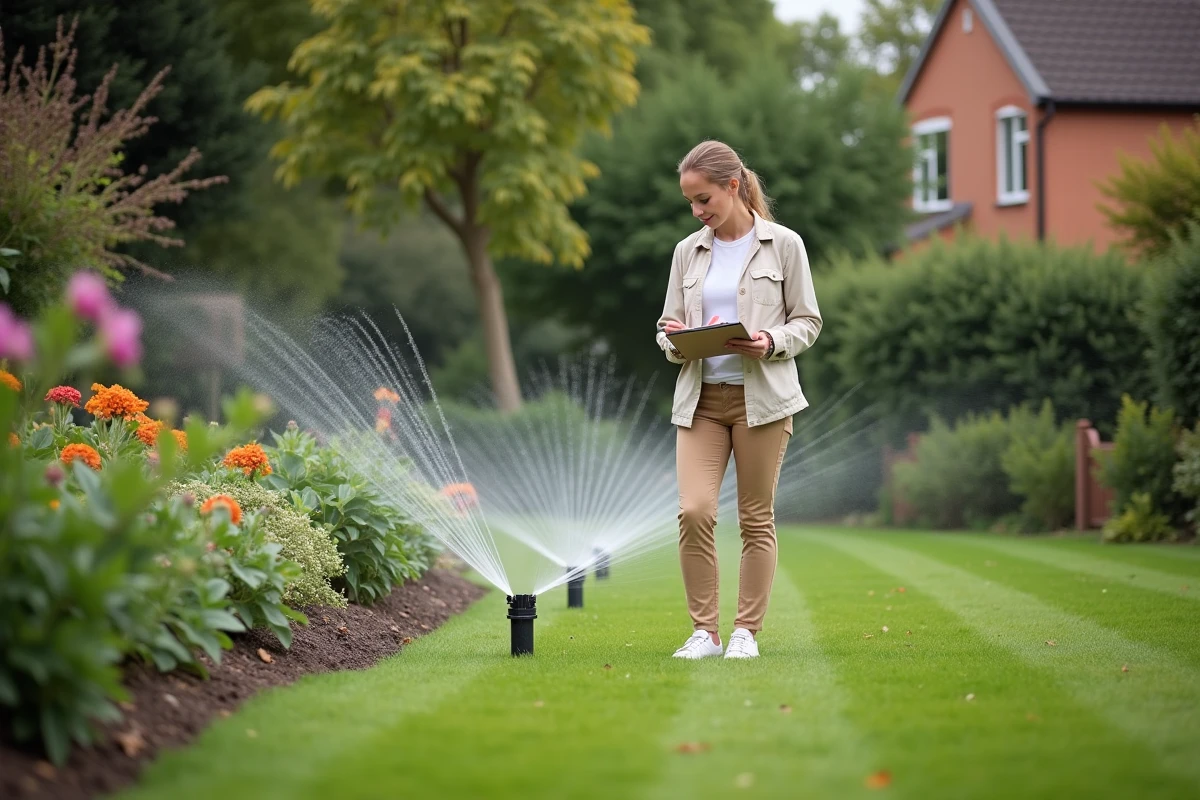
It’s impossible to think of an effective installation without a real observation of the terrain. Soil composition, layout of corners, diversity of plantings: every element influences technical choices. Betting on a modular system gives the freedom to adjust and transform the network without major concerns over the seasons.
Adding a timer makes management much more flexible: it allows you to adapt the duration and frequency of watering to avoid waste. Moisture and rain sensors, on the other hand, wisely cut off watering when the weather intervenes. If you want to refine further, solenoid valves and autonomous zone management offer great flexibility from one sector to another.
Some good habits help maintain the reliability of the system over time:
- Remember to check the pressure at several points in the network and regularly clean the connections to limit problems related to deposits or invisible wear.
- Flushing the network at the end of summer or after a period of non-use is essential to avoid sand, mud, and discreet clogs.
- Using a rainwater tank requires adjusting the pressure at each seasonal restart if you want to maintain a consistent flow throughout the summer.
No garden remains identical for long. Flowerbeds expand, the weather plays its role, needs change. Reevaluating the performance of your watering system, adjusting parameters, is the only way to maintain a dynamic garden that withstands and flourishes, season after season. Adapting your network is ultimately keeping pace with the life of the garden: a perpetual movement, sometimes unpredictable, but always exciting to accompany.