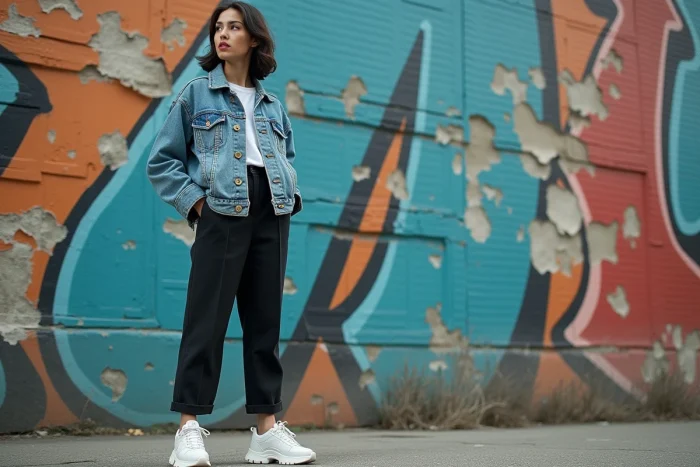
A high school student wearing an oversized hoodie in class is making a different fashion choice than another who opts for a tucked-in shirt with wide pants. This seemingly trivial choice triggers immediate reactions within the group: glances, comments, inclusion, or exclusion. Fashion shapes the daily lives of young people far beyond the simple act of purchasing, structuring their social relationships and their self-perception.
School rules and clothing: the daily friction ground
Fashion is rarely discussed from the perspective of the place where young people spend the most time: the school. Internal regulations increasingly govern attire, from crop tops to hoodies to headgear. The Ministry of National Education documented, in a report presented to the Higher Council of Education in January 2024, an increase in conflicts over outfits deemed inappropriate and their impact on the school climate.
For adolescents, these restrictions become a ground for identity negotiation. Wearing a prohibited garment is a way to test a limit. Accepting the rule sometimes means giving up a group marker. Between claimed style and imposed norms, each morning becomes a concrete arbitration.
By observing these frictions, we better understand how youth fashion transcends the question of taste to touch on authority, belonging, and transgression.
Fashion style and social hierarchy among adolescents
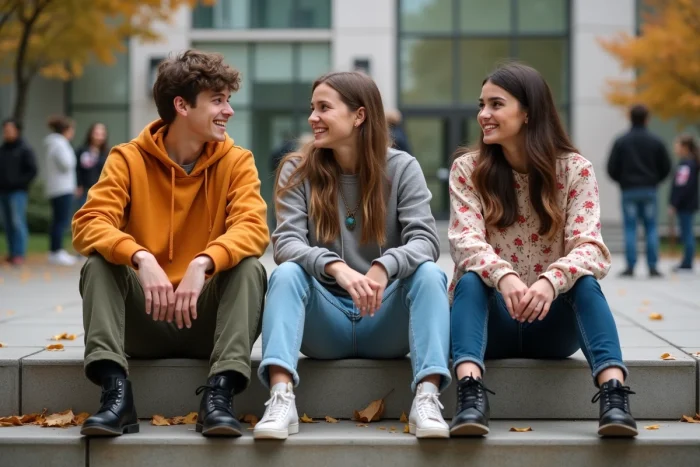
In a middle or high school courtyard, clothing functions as an immediate reading code. The brands worn, the type of sneakers, the cut of the jeans: all of this positions an adolescent within an informal hierarchy. Sociological surveys show that social position has a determining effect on clothing practices, far beyond simple budget constraints.
Second-hand and fast fashion: two camps that judge each other
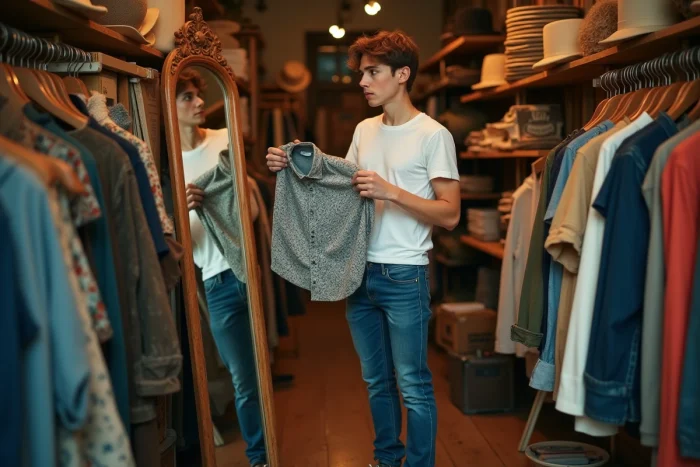
Second-hand fashion reconfigures these hierarchies. Some adolescents claim it as a moral and identity marker, a way to distinguish themselves from those perceived as fast fashion consumers. Second-hand clothing becomes a sign of ecological awareness, but also a tool for social distinction.
Responses vary on this point: in some institutions, vintage is valued, while in others it remains associated with a lack of means. The local context weighs as much as the national trend.
- Choosing a thrift store over a big-box retailer signals an ethical stance, but also cultural capital
- High-end second-hand brands (Vinted, Vestiaire Collective) create a new status scale among peers
- The overt rejection of fast fashion can become a form of inverted social pressure, where buying new is judged negatively
Digital fashion and avatars: style beyond the physical
Youth fashion is often reduced to what is seen on the street. This ignores a growing part of their fashion expression: video game skins, avatar accessories, and AR filters. For 13-17 year-olds, the appearance of the avatar matters as much, if not more, than physical attire for self-expression, according to a report published by The Business of Fashion in partnership with Roblox in October 2023.
These virtual expenditures are not anecdotal. They structure daily style and create parallel fashion codes, invisible to parents but perfectly readable among peers. A rare skin in Fortnite or an exclusive accessory on Roblox functions exactly like a limited edition pair of sneakers.
Double wardrobe: physical and digital
Young people now manage a double wardrobe. One is worn, the other is clicked. Both obey the same logics: rarity, group belonging, self-assertion. The difference lies in the budget. A skin often costs less than a branded garment, which partially redistributes the cards of access to style.
This invisible fashion escapes school regulations, parents, and physical constraints. It offers a space of total freedom where the adolescent constructs a fashion identity without the limits of the body or the family budget.
Social networks and the construction of personal style
Social media do not just disseminate trends: they transform each adolescent into a curator of their own style. On TikTok or Instagram, a young person does not passively consume fashion. They select, combine, film, and publish. Clothing becomes content.
This dynamic accelerates trend cycles. A pant cut can go from “trendy” to “outdated” in just a few weeks. Influencers play a role as prescribers, but adolescents also develop a critical capacity: they follow a creator for their aesthetic, but unfollow when they become too commercial.
The pressure of constant renewal
The pace set by networks creates concrete pressure. Wearing the same outfit twice in a story can seem problematic for some adolescents. This injunction to renew pushes toward overconsumption or, conversely, toward assumed avoidance strategies.
- Some young people adopt a “personal uniform” (same colors, same cut) to step out of the trend race
- Others multiply low-cost purchases to feed their content flow
- Style becomes a social skill, not just a matter of financial means
Youth fashion is neither simply a consumption issue nor just a matter of taste. It acts as a complete communication system, from the internal regulations of high school to the digital avatar, passing through peer judgment on the origin of a garment. Each fashion choice, physical or virtual, engages a position within the group, and it is this social function that makes the subject so charged for adolescents.